
The Thir13en team is directed by a motivation to provide cost effective low-carbon sustainable building fabric solutions to assist in the avoidance of creating adverse effects of global warming through the construction of residential/commercial developments.

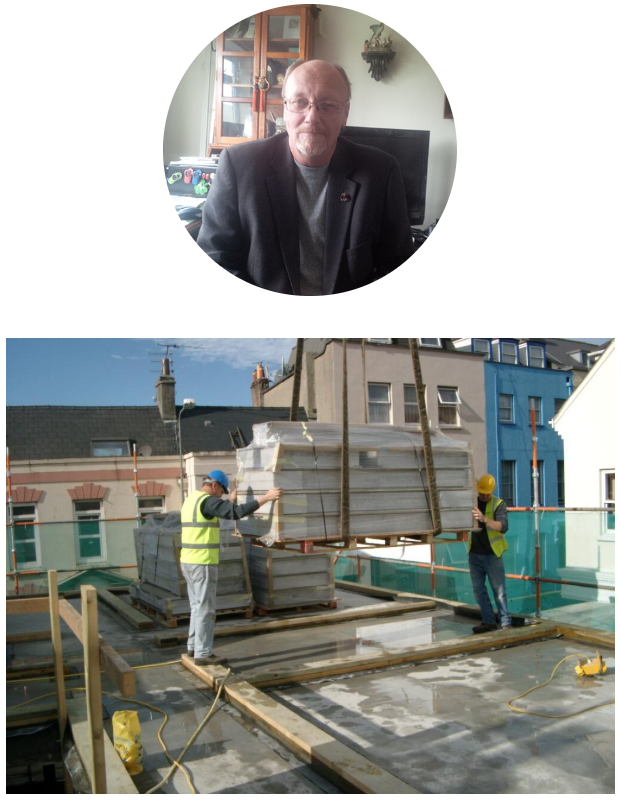
Thir13en was founded on more than four decades of experience in sustainable design, advanced material science, low-carbon manufacturing and modern construction. Our mission is simple: to help clients deliver environmentally responsible developments and material solutions that are practical, commercially viable and built for the future.
Led by Norwegian multiple award-winning environmental patent inventor, divergent innovator and construction specialist Tor Høie, the Thir13en team brings together expertise in architecture, engineering, manufacturing and sustainable development. For over 45 years, Tor has worked with very gifted people internationally developing low-carbon building materials, energy-efficient construction systems and innovative structural solutions that challenge conventional approaches to building.
Having created and institutionally tested and proven low-carbon materials previously unknown to meet ordinary regulatory requirements and approvals, Tor proved international acceptance through strict testing requirements to BS:EN and DIN standards along with commercial partners, surprising international testing institutes by introducing new low-carbon products and new cost effective methods of construction.
Our Approach
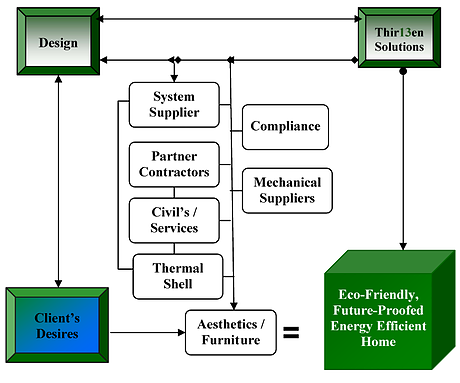
At the heart of our work is the Integrated Design Process; a proven methodology that evaluates every aspect of a project from environmental, technical and commercial perspectives. By considering materials, manufacturing, logistics, energy performance and long-term operational impact from the outset, we help clients achieve genuinely sustainable outcomes.
We were early advocates of what is now known as a fabric-first approach, recognising decades ago that energy efficiency begins with intelligent design, high-performance building envelopes and appropriate ventilation, rather than relying solely on (or being ‘rescued by’) bolt-on solutions or technologies.
MMC (Modern Methods of Construction) is a process which focuses on off-site construction techniques, such as mass production and factory assembly, as alternatives to traditional building. The Thir13en team realised decades ago that the creative solutions found in manufacturing and production could also be utilised in construction, so have made low-carbon MMC a foundation of its core principles.
Low-Carbon Construction
Thir13en embraces Modern Methods of Construction (MMC) and off-site manufacturing to improve quality, reduce waste and further lower embodied carbon. By applying the efficiencies of modern manufacturing to construction, complimenting this with project specific material science, we create building solutions that are faster, more predictable and environmentally responsible.
Our expertise in material science enables us to integrate bio-based, recycled and low-carbon materials into construction systems that significantly reduce environmental impact and costs while maintaining performance, durability and compliance.
Sustainability Grounded in Reality
We believe meaningful environmental progress comes through measurable reductions in carbon emissions rather than simply relying on offsets or theoretical targets. While zero-carbon construction remains a long-term aspiration for the industry, our focus is on delivering practical, proven low-carbon solutions that achieve real-world results today.
Every project undergoes rigorous evaluation, including the environmental impact of materials, manufacturing processes, transportation, installation and long-term building performance. This holistic approach ensures sustainability is embedded throughout the entire lifecycle of a development.

Please Note: According to the Institute of Sustainability Studies (ISS), Zero carbon refers to a condition in which no carbon emissions are produced at all, either directly or indirectly through energy use, transportation, or industrial processes. Unlike carbon neutrality, which allows emissions to occur but balances them through ‘offsets’ like reforestation or carbon capture, zero carbon requires complete elimination of emissions at the source. Similarly, while net zero focuses on balancing emissions with removals, zero carbon emphasises total eradication of CO2 emissions. Zero carbon represents a fundamental shift in energy production, consumption, and resource management, requiring bold action, collaboration, and continuous innovation. It is central to global sustainability goals, including the Paris Agreement, and serves as a benchmark for organisations, cities, and nations striving to combat climate change. Achieving zero carbon is not only an aspirational environmental imperative but also a pathway to resilient, sustainable, and future-ready systems. But, zero carbon is not here yet.
Even though we understand it, we also do not believe in ‘offsetting’ emissions such as just buying carbon credits, and append-aging those credits onto a project unless other solutions are untenable and an imperative project must be achieved, regardless. The solutions for low-carbon project exists until further parameters are achieved, and should be rated and utilised.
Working With Clients
Thir13en works with developers, investors, architects, manufacturers and project teams seeking sustainable, commercially effective solutions. We provide specialist consultancy, material specification, design support and alternative construction strategies that align environmental objectives with financial performance.
Our goal is simple: to help clients create buildings that are healthier, more efficient, lower in carbon and most often more cost-effective than conventional alternatives.
Better materials. Smarter design. Lower carbon. Stronger outcomes.

Our Collaborative Leadership Team
Stephen Westlake – our Chairman is an international board level chief executive project manager, a Mechanical Engineer with a flair for overseeing manufacturing capital projects of any size, with thousands of employees, to completion while overseeing the increase of enterprise values in organisations and IPR’s, while meeting client expectations. Kvaerner in its heyday as the world’s largest C&E construction company, Davey Engineering, Voest-Alpine, Gulf Investment Corp etc, comes to mind.
Zoltán Dobó – a Chemical Engineer and Head Project Engineer who runs the NISIO Group which specialises in technological processes and project management. NISIO ensure capital equipment production to specifications and quality control of off-site component manufacture, paying special attention to expansion and optimisation of production lines. NISIO regularly undertake technology development studies, production planning, capacity expansion and utilisation optimisation tasks, while solving on-site problems on behalf of clients.
Tor Helmich Høie – a multiple award-winning environmental patent inventor, a synthesist innovator, architectural technician, grants recipient, material and building system creator, critical and divergent thinker concentrating on specific material science for the construction industry. Tor oversees institutional and regulatory structural and material testing culminating in approved certifications and IPRs while motivating and driving the whole team to frustration, yet the team gets admirable results. Tor’s experience in low-carbon construction and materials is vast and unique, having lobbied governments for decades for improvements in the sector, while surprising major institutional testing establishments on the behaviour of low-carbon materials and structural engineering solutions.
Ernest Nagy de Nagybaçzon – arguably Europe’s most prolific inventor in products that have made its way into our daily lives. A self-taught architect, patent inventor, material scientist, innovator, research specialist, non-traditional composite developer, mentor, and an expert in observational studies with a flair for spotting anomalies that may be removed, pursued or enhanced, while exploring relationships between variables that may become experimental studies with unexpected results, such as proving that a thin coating can be stronger than a thick coating, depending upon applications, amongst many. Ernest has been sponsored by Governments, Educational Institutions and the private sector, introducing new methods and materials in applicability’s, opening new market opportunities and research opportunities.
Kathleen Elisabeth Veerle Ridderhof – a Propaedeuse Fiscal Law degree holder, Veerle is a successful business development consultant, having worked with American Express, Gartner and others, teaching the strategically launching of new products and scalable business models with the intention to grow beyond the initial scope with Strategic plan development: LCM, PPM, Enterprise Architecture, I&T Operating Models, Governance, Change management, Data and Analytics and many more. Working at Board Level, Veerle assists and drives on mission critical priorities, ensuring compliance to investors’ satisfaction.
Christina Jane Hadfield – our in-house Architect visualises a client’s desire while embodying that rare blend of artistry and pragmatism, proving ‘A good design just simply works!’ Delivering a highly practical environment which makes every process simpler; finding the sweet spot where the space influences the behaviour. It’s often invisible, as good design can be. Christina’s intuitive understanding of spatial behaviour aligns seamlessly with our drive to make sustainability the default, not the exception.
Tomas Skiba – educated as a structural engineer, a builder, developer and large-scale event organiser, with experience of most innovative building systems, from concrete applications, brick and mortar, timber construction to structural insulated panels (SIPs), with emphasis on Health & Safety and contractor liability.
We/our – are small words that represents a large group of like-minded people and relationships that assist us in our goals.

Mission Statement: Build Tight, Insulate Right, and by using our Integrated Design Process using competitive sustainable low-carbon solutions in relation to client benefits, by Building Better, For Less.
"Limits are an inherent part of raw material supply reality, so let's do something about it!"

-Tor H. Høie, testing at Building Research Establishment (BRE), Watford, Greater London 1999

Tor has been often asked what his driving motivation is behind his low-carbon, energy efficient products and solutions. and for Tor and his colleagues it is really a no-brainer. To the right or below you will find a video that emphasises why everyone should do what they can to reduce their energy requirements and material consumption (within reason}, and why this should be a stricter Government regulation throughout the world. “There’s No Tomorrow” is a half-hour animated documentary about resource depletion, energy and the impossibility of infinite growth on a finite planet. Inspired by the pro-capitalist cartoons of the 1940’s, the film is an introduction to the energy dilemmas facing the world today. ‘There’s No Tomorrow· is an animated film dealing with resource depletion, energy, growth and collapse. It is a primer on the energy dilemmas facing the world of the 21st century. ‘There’s No Tomorrow’ is primarily the work of one person, and was created over ~3 years in conjunction with the Post Carbon Institute. It may be over a decade old, but gets the point across. Whether you agree with everything therein or not, it is worth viewing, so grab a cuppa and a piece of cake, and be prepared for an eye-opening experience which will at the least make one think.
- Created by (All rights go to): https://www.incubatepictures com/ Film-Maker Dermot O’Connor.
- Born: Ireland, 1969. Began in animation m 1988. Moved to the US in 1993. Worked on features, TV, lnternet/mobile; currently teaches online. Based In Portland, Oregon.
- A screenshot from this movie is currently used in the catalogue for the Louvre’s exhibition (page 64).
- ‘To Boldly Grow’ is the comic book version of the documentary “There’s No Tomorrow’_ There are two reasons for the title change: firstly, most people missed the point of the movie. which was an attack on Growth; secondly, the title scared people, who assumed it means ‘we’re doomed’. This is not the message of the film, or the book.
So, we obviously have to be aware and do something about it, right? So along comes EV (electric vehicles) with the best of intentions, yet…? The graph below provided by ScienceDirect (Volume 191, March 2024, 114176) shows the true sustainable economic and environmental issues/cost of mining electric-car-battery metals (just the batteries) for those that are interested, and similar challenges now need to be addressed by all parties involved in the construction industry:
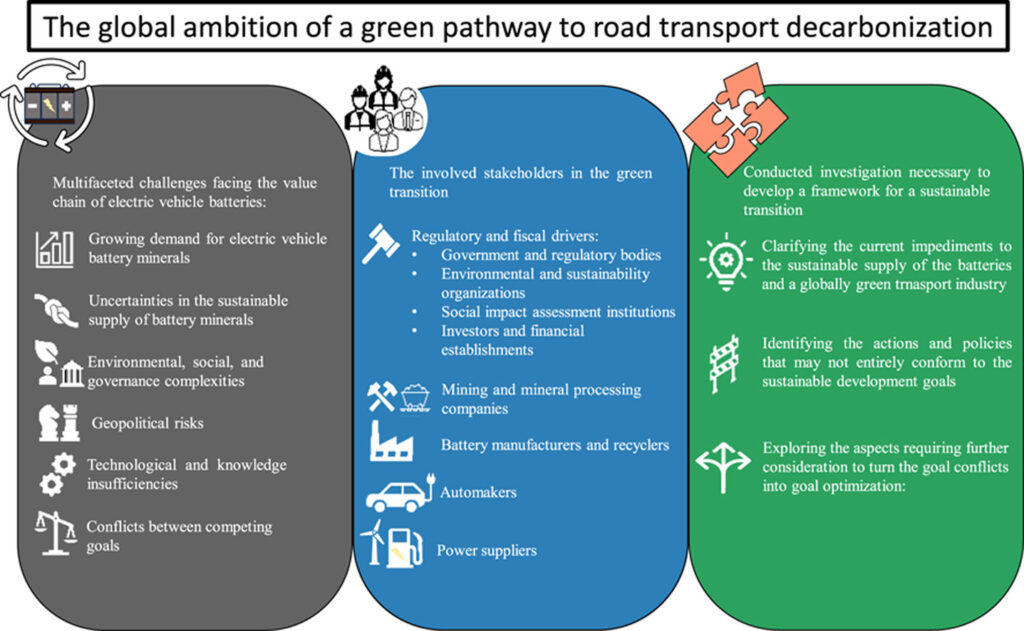
Sustainability challenges throughout the electric vehicle battery value chain – ScienceDirect
Ok, from the grim advisory to the visionary here is a futuristic vision put together by Nissan electric car manufacturer and supported by Foster + Partners, a global studio for architecture, engineering, urban and landscape design, rooted in their version of sustainability.
Fuel Station of the Future puts paid to the pumps
NEOM: Made to Change (just click on the words) is another recent perspective of what can be envisioned to be done with sustainability at it’s core, whether you approve of their politics and work conditions or not. There are a multitude of futuristic dreams out there, and the fulfillment of ideas start with dreams, vision and perseverance in all walks of life, from raw material supply to end-products, and the people that make it so. Time will tell, and history will judge.
This is what Prof. Carl Sagan had to say while testifying before Congress way back in 1985 on ‘the green house effect’ which has now definitionally become known as ‘climate change‘ throughout the world:
and…

The Stockholm Resilience Centre was founded based on the insight that the biosphere, society and the economy should be studied as one system to address the complex challenges that humanity faces, and pushed for a new way of viewing the economic, social and ecological aspects of the Sustainable Development Goals (SDGs).
The illustration below describes how economies and societies should be seen as embedded within the biosphere. This vision is a move away from the current sectoral approach where social, economic, and ecological development are seen as separate processes.
These processes are now commonly known as the United Nations’ Sustainable Development Goals (SDGs), and unfortunately it is now evident that there is a geographical discrepancy as data suggests humanity has “drastically exceeded critical losses in functional biosphere integrity of these planetary boundaries”.
From Thir13en’s perspective, the design of sustainable buildings requires the integration of many kinds of information into an elegant, useful and durable whole entity staying ahead of all potential planning and regulatory approvals on behalf of the client.
An Integrated Design Process includes the active and continuing participation of users and community members, planning officials, building regulations oversight, building technologists (raw materials to manufactured solutions), contractors, cost consultants, civil engineers, mechanical and electrical engineers, structural engineers, specification specialists and lately consultants from many specialised fields, dealing with issues that have resulted from new building regulatory requirements or desired outcomes.
As stated by our inhouse Architect Christina “When done correctly from a client’s and/or an occupier’s perspective, the end result just simply works.”
Please remember, we may not agree with everything stated in the above films and intentions, but they partially show the problems, opportunities and some potential applications when the visualisations can work out economically and environmentally.
As per MLA College Global Sustainable Development courses: Many question whether we’re merely witnessing another iteration of natural change, albeit alarming. However, empirical data [of peer-reviewed evidence] indicates that the current rate and degree of change are unparalleled within all our geological records. After ruling out all-natural mechanisms, only one explanation remains: the release of carbon into the atmosphere due to human activities.
And finally: